

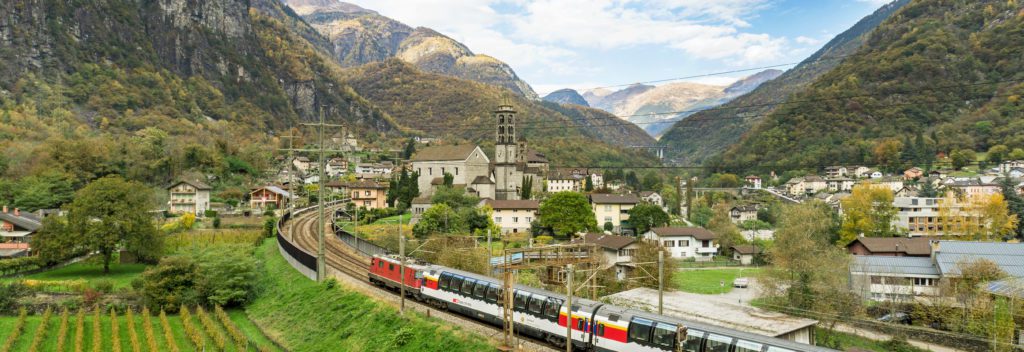
What is the Gotthard Panorama Express?
The Gotthard Panorama Express is one of Switzerland’s most varied scenic journeys, combining a historic Alpine railway with a cruise across one of the country’s most beautiful lakes. Linking the Italian-speaking canton of Ticino with central Switzerland, the route follows the original Gotthard Railway across the Alps before continuing by boat on Lake Lucerne.
This unique combination of rail and lake travel makes the Gotthard Panorama Express one of the most memorable ways to cross the Swiss Alps.
The Gotthard Panorama Express Route
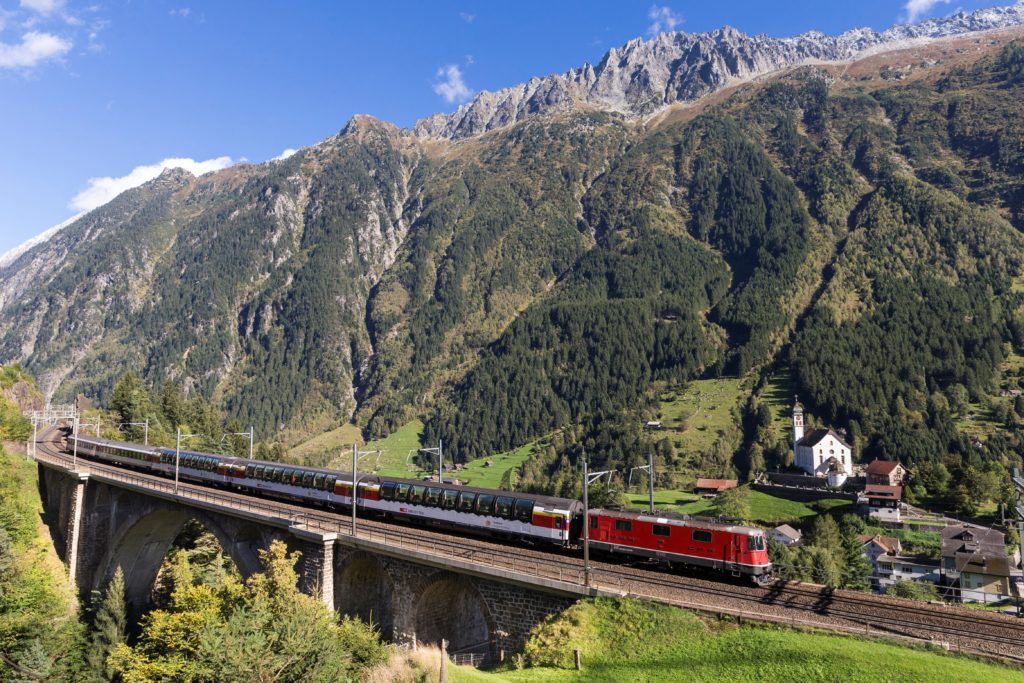
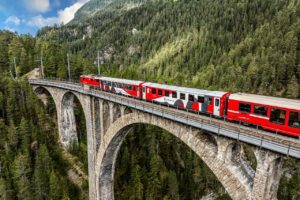
The original Gotthard Railway over the Alps opened in 1882. Travelling along this historic route, passengers first pass through narrow valleys, spiral tunnels and across impressive stone viaducts as the line climbs into the dramatic Alpine landscape of the Gotthard Pass. Along the way, the scenery changes from the chestnut forests and mild, Mediterranean-influenced climate of Ticino to the rugged high-mountain landscapes of central Switzerland or vice versa.
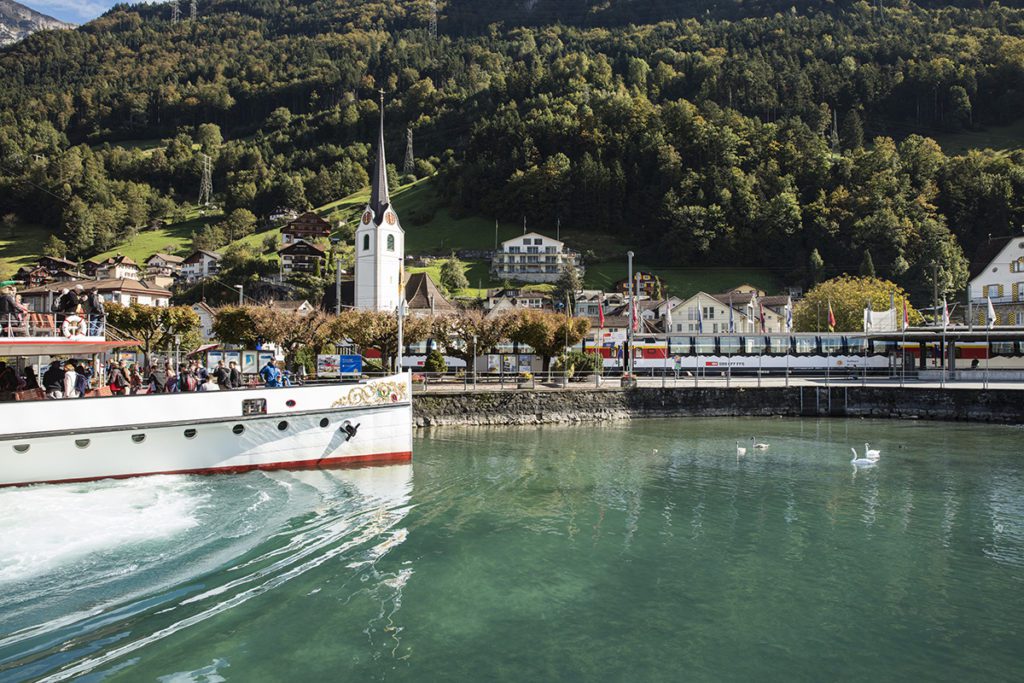
At the lakeside village of Flüelen, the journey continues by historic paddle steamer or a modern motor boat for a cruise across Lake Lucerne. Surrounded by steep mountains and fjord-like scenery, the voyage provides a wonderful final stage as the route connects the contrasting regions of southern and central Switzerland.
Key facts:
- Journey length: approximately 190 km (120 miles) rail and boat combined
- Journey time: around 5½ hours
- When does it run?: mid-April to mid-October
- Railway section: historic Gotthard mountain route
- Boat section: Flüelen to Lucerne on Lake Lucerne
- Highest point: approximately 1,100 m (3,600 ft) near the Gotthard summit tunnels
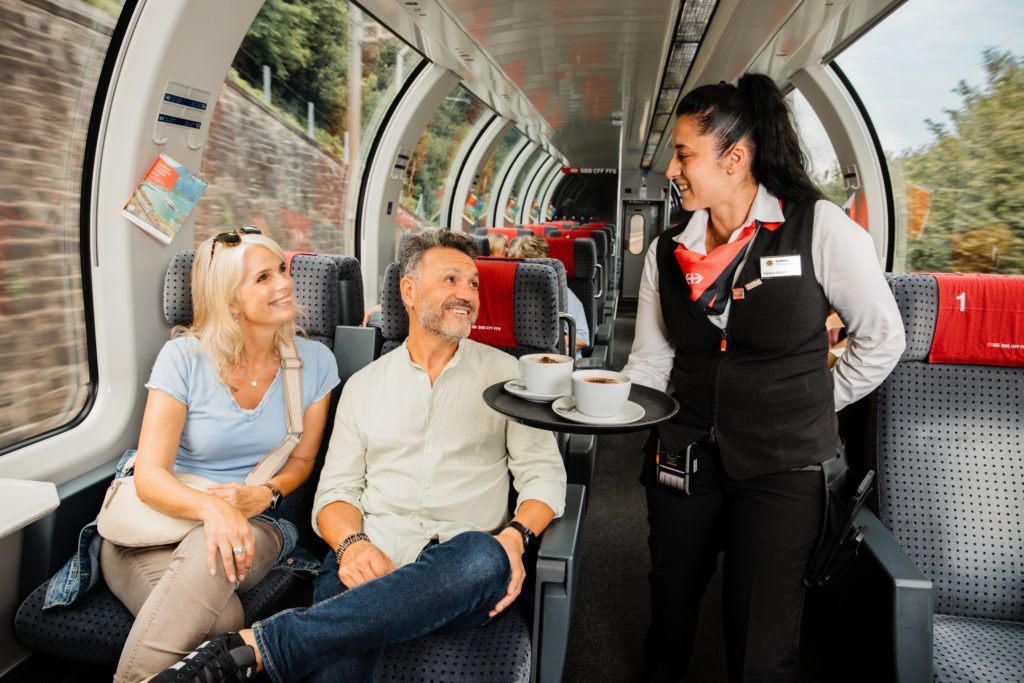
On Board the Gotthard Panorama Express
Gotthard Panorama Express trains are designed for scenic travel, with large panoramic windows offering clear views of the Alpine landscape.
All carriages are First Class panoramic coaches on the rail section, with comfortable seating and spacious interiors designed for sightseeing. During the journey, knowledgeable local guides explain the history of the Gotthard route and highlights points of interest along the way.
Facilities typically include:
- Panoramic coaches with wide windows
- Air-conditioned carriages
- Reserved seating
- Onboard commentary about the route and its history
At Flüelen the journey continues by boat across Lake Lucerne. Passengers can relax on deck or in the saloon while enjoying views of steep mountains, lakeside villages and historic landmarks. Meals and refreshments are available in the onboard restaurant, and many travellers choose to reserve a table for lunch during the cruise.
Highlights Along the Gotthard Route
Several historic and scenic landmarks make the Gotthard Panorama Express one of Switzerland’s most fascinating railway journeys.
Lugano
The journey begins in the lakeside city of Lugano, known for its palm-lined promenades and Italian-influenced atmosphere. Its mild climate and lakeside setting give the region a distinctly Mediterranean character.
Wassen Church
One of the most famous sights along the route is the white church of Wassen Church. Because the railway loops through several spiral tunnels, passengers see the church from three different angles as the train climbs the valley.
Flüelen
At the northern end of the mountain railway lies Flüelen, a small lakeside village where passengers transfer directly from train to boat.
Lake Lucerne
The cruise across Lake Lucerne is the final highlight of the journey. Surrounded by steep mountains and historic lakeside settlements, the lake has long been associated with the early history of the Swiss Confederation.
Lucerne
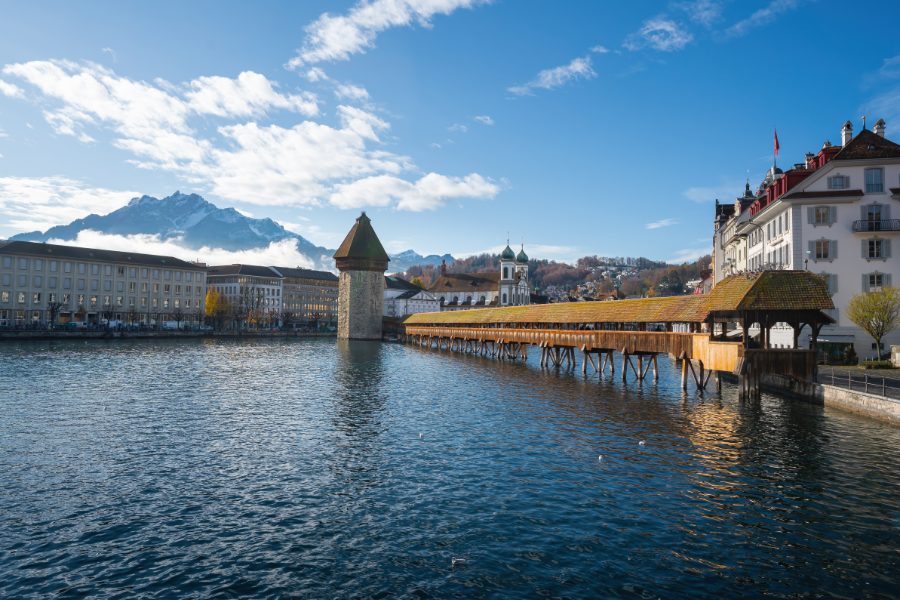
The journey ends in Lucerne, one of Switzerland’s most attractive cities. Known for its medieval old town, painted buildings and the famous Kapellbrücke, Lucerne sits at the north-western end of the lake and is a gateway to central Switzerland.
A Historic Alpine Railway
The rail section of the Gotthard Panorama Express follows the original Gotthard Railway, one of the great engineering achievements of nineteenth-century Europe.
Opened in 1882, the line was designed to overcome extremely steep Alpine terrain. Engineers used a combination of long tunnels, curved viaducts and spiral loops to gain height while maintaining a manageable gradients for trains.
Although most long-distance trains now use the modern Gotthard Base Tunnel deep beneath the mountains, the historic mountain line remains one of the most scenic railways in the Swiss Alps for travellers.
Holidays including the Gotthard Express
If you’re looking for an itinerary which includes the Gotthard Express, check out our 12 day Swiss Lakes & Mountains holiday. You can visit the top of the Schilthorn mountain via cable car and it also includes journeys on the equally scenic famous Bernina Express and Glacier Express.
Or, you can tailor-make a holiday to feature the Gotthard experience. Holidays that can easily be tailored to include it re the Grand Tour of Switzerland, Discover Ticino: Italian Switzerland, Venice via the Gotthard Pass – currently, the train takes the Gotthard tunnel, but this can be changed to the scenic Gotthard Panorama Express – , and Lake Lugano by Rail.
Alternatively, one of our Travel Designers can create a totally bespoke itinerary just for you.
There are lots of ways to book. You can send an enquiry with your preferred dates, party size and where you want to go. Or, talk to our team on the phone, via a video call or in person – book here.
Recent Posts
Recommended Itineraries



Share this post






Featured Destinations