

10 Spooky Places to Visit in Europe by Train
Looking for somewhere a little different to visit in Europe this Halloween? There’s a darker side to many of Europe’s best-known destinations. Beyond the familiar landmarks you can find catacombs, ossuaries, chapels decorated with bones, centuries-old ghost stories and places associated with spooky goings on, from Dracula to black magic.
We’ve embraced the Halloween theme and rounded up ten of Europe’s more haunting sights. Some are undeniably macabre, but they’re also fascinating places that needn’t be scary, revealing unexpected, lesser-known stories about European history, architecture and culture.
All are worth seeking out on a European rail holiday, whether you’re travelling at Halloween or simply fancy seeing a different side to somewhere you thought you knew.
1. Transylvania, Romania: the story behind Dracula
Few places are as closely associated with Dracula as Transylvania, but the true history is rather more complicated than the legend.
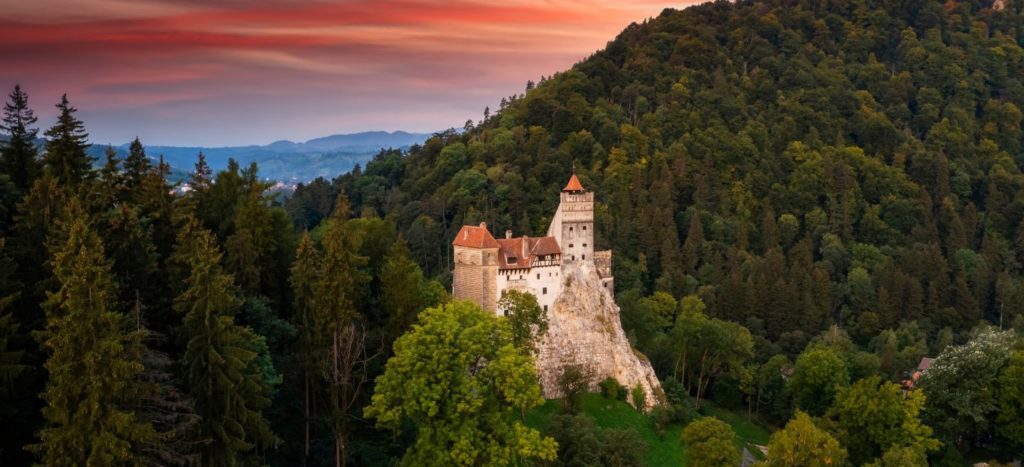
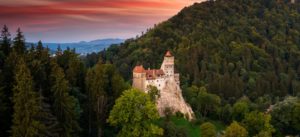
Bran Castle is the obvious place to start. The medieval fortress has become known around the world as Dracula’s Castle, although its connection to Bram Stoker’s fictional count is largely a product of popular culture. Stoker never visited Romania, while Vlad III, better known as Vlad the Impaler and frequently associated with Dracula, has only limited links with Bran Castle.
Over the years, fact and fiction have become intertwined and the Dracula legend has taken on a life of its own. At Bran Castle, you can delve into the stories, learn more about Vlad the Impaler and find out how this Transylvanian fortress became so closely associated with the fictional count.
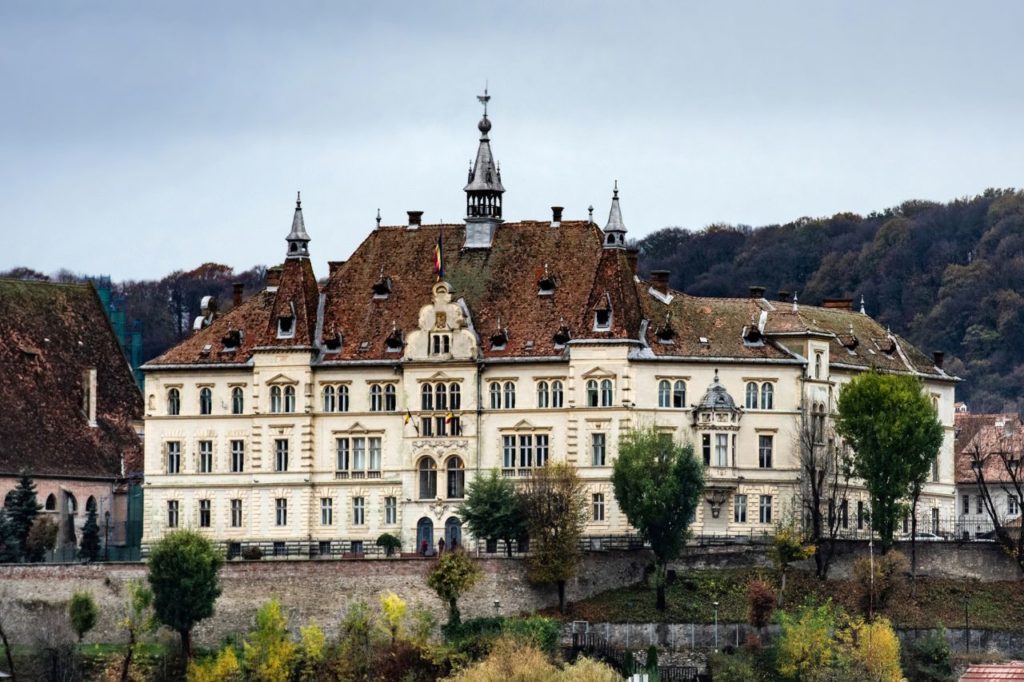
The Dracula story continues beyond Bran Castle. Medieval Sighișoara, with its cobbled streets, colourful houses and imposing hilltop citadel, is traditionally regarded as the birthplace of Vlad the Impaler. In Brașov, Gothic architecture and a beautifully preserved Old Town offer another glimpse into Transylvania’s past, and the city makes a great base for exploring the surrounding region.
See it by rail: Our Transylvania to the Black Sea: A Continental Railway Journey travels by sleeper from Vienna into Transylvania, with stays in Sighișoara and Brașov and an excursion to Bran Castle. The holiday then continues through Romania to Bucharest and the Black Sea.
Sighișoara, Romania
2. Paris, France: beneath the streets of the capital
You might think you’ve seen all there is to see in Paris: the Eiffel Tower, Sacré-Cœur and Notre-Dame. But around 20 metres beneath its busy streets lies a very different side to the French capital, proof that there’s much more lurking beneath the surface of Paris.
The Paris Catacombs occupy part of a vast network of former quarry tunnels. In the late 18th century, overcrowded cemeteries had become a serious problem, and human remains began to be transferred underground.
Today, the route open to visitors passes through an ossuary containing the remains of several million Parisians, with skulls and bones arranged along the walls of the tunnels.
It’s an extraordinary contrast to the grand boulevards and familiar landmarks above ground, and proof that there’s much more lurking beneath the surface of Paris.
See it by rail: Paris is one of the easiest European cities to reach from the UK, with direct Eurostar services from London. Add an extra Paris stay to a tailor-made journey or include it as part of a longer holiday such as our Grand Tour of France by Rail.
3. Prague, Czechia: ghosts, legends and alchemy
With Gothic spires, narrow medieval streets and centuries of legends, Prague has all the ingredients for an atmospheric Halloween break. Explore the Old Town after dark, when its towers and historic buildings provide a suitably Gothic backdrop, or book a ghost tour to hear some of the tales associated with its streets.
Prague also has a fascinating history of alchemy. During the reign of Emperor Rudolf II, the city attracted alchemists, astrologers and scholars to his imperial court, adding to Prague’s reputation for mystery and magic. You can find out more at the Museum of Alchemists and Magicians of Old Prague, tucked away in the historic Malá Strana district.
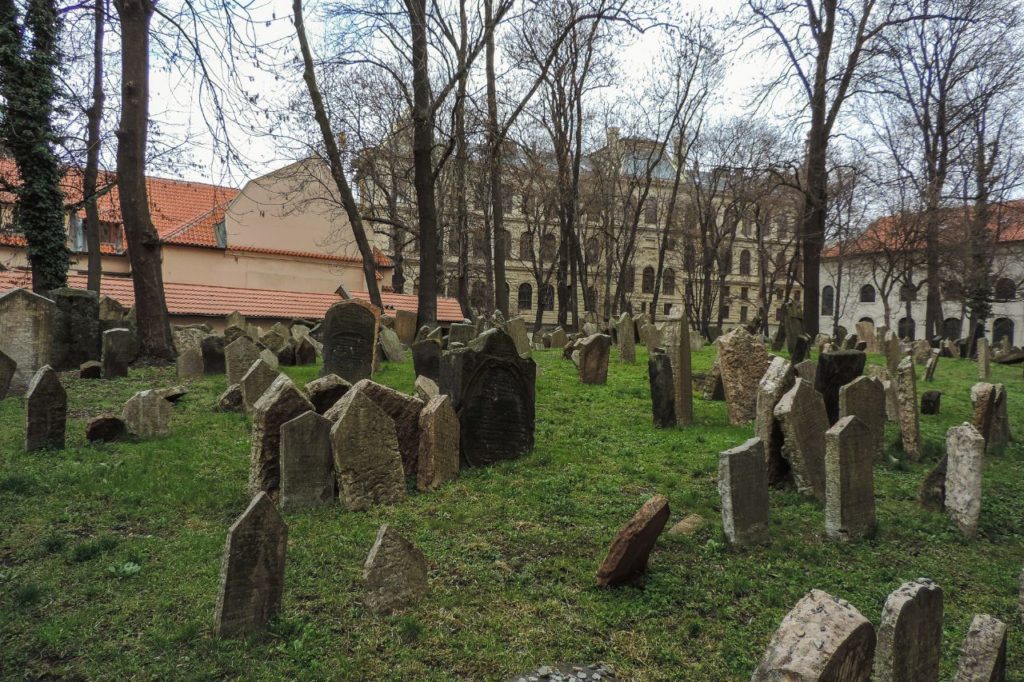
But one of the city’s spookiest legends comes from its historic Jewish Quarter. Rabbi Judah Loew was said to have created the Golem, a figure made from clay, to protect Prague’s Jewish community. Rabbi Loew is buried in the Old Jewish Cemetery, and exploring the surrounding Jewish Quarter provides the context for a story that has been retold for centuries.
See it by rail: Travel overnight to the Czech capital on our Prague Without Flying holiday, or combine Prague with Vienna on our Budapest, Vienna & Prague by Rail itinerary.
Old Jewish Cemetery, Josefov, Prague
4. Palermo, Sicily: the Capuchin Catacombs
One of Palermo’s most unusual historic sites lies beneath its Capuchin monastery.
The Capuchin Catacombs contain around 2,000 skeletons and mummified bodies. Mummification became an important burial tradition here, and the catacombs eventually became the resting place of Capuchin friars and members of Palermo society.
The bodies were organised into different areas according to categories such as profession, age and gender, giving an insight into Sicilian attitudes towards death and social status.
This is certainly one of the more macabre places on our list, and perhaps not one for the faint-hearted. These are real human remains, with mummified bodies still dressed in clothing from their lifetime and displayed along the corridors.
Photography is understandably prohibited, so you won’t find anyone posing for Instagram here. Instead, take your time to look around and learn more about the burial traditions and social history behind this extraordinary place.
See it by rail: Sicily and the Amalfi Coast by Rail includes three nights in Palermo, giving you two full days in the Sicilian capital. Even getting there is unusual: the train is carried across the Strait of Messina by ferry before continuing onto Sicily.
5. Tallinn, Estonia: follow the city’s ghost stories
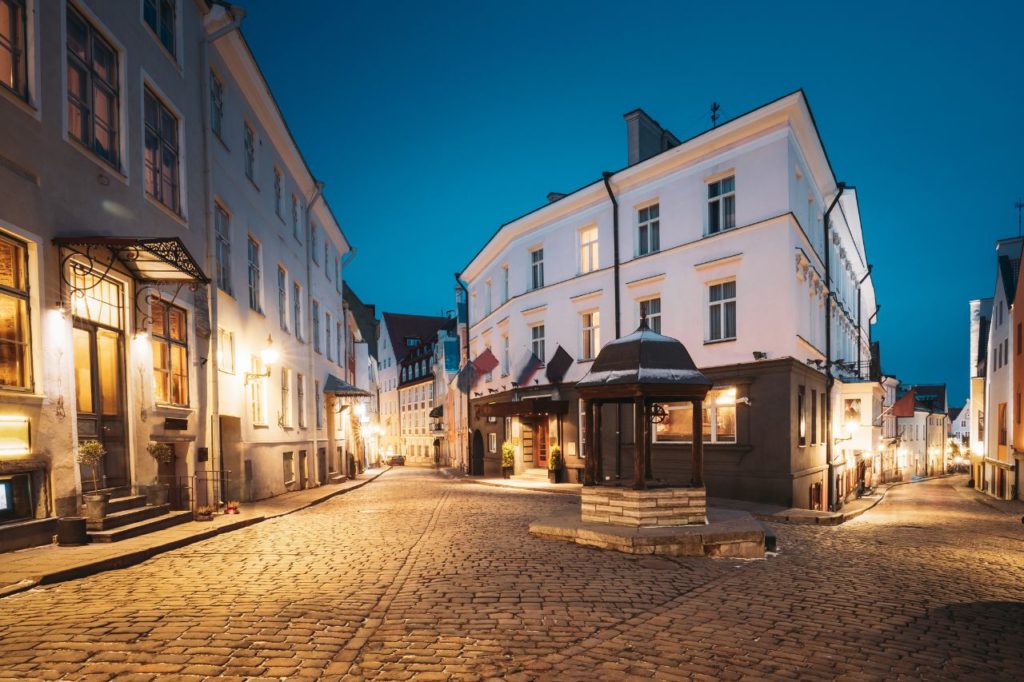
Tallinn’s medieval Old Town, with its cobbled lanes, towers and city walls, provides a suitably atmospheric setting for an impressive collection of ghost stories and legends.
One of the best known concerns a building at Rataskaevu 16. According to the story, a mysterious stranger paid the owner to use an upstairs room for a party, on the strict condition that nobody disturbed his guests. A servant ignored the warning and peered into the room, only to discover that he was witnessing the Devil’s wedding. He is said to have died shortly afterwards.
Today, the building is home to a restaurant, but look up and you can still spot the false painted window associated with the story, known locally as the Devil’s Window.
And that’s only one of Tallinn’s ghost stories. Ghostly monks, unexplained footsteps and mysterious apparitions feature in stories associated with buildings and towers across the Old Town. You can join a ghost tour to hear more spooky legends around the medieval streets after dark.
See it by rail: Our Baltic Capitals by Rail holiday travels across Europe before continuing through Vilnius and Riga to Tallinn. With plenty of time in all three Baltic capitals, there are ample opportunities to uncover their spookier sides.
Cat Well on Rataskaevu, Tallinn
6. Milan, Italy: look beyond the Duomo
Shopping, fashion, opera and the Duomo may be the obvious reasons to visit Milan. Human bones probably aren’t.
Just a short walk from the Duomo is San Bernardino alle Ossa, where the walls of a small chapel are covered with human bones. Skulls, vertebrae and long bones have been incorporated into the decoration, framing walls and doorways.
For something on a much grander scale, head to Cimitero Monumentale. Opened in the 19th century, this vast cemetery is as much an open-air museum as a burial ground, filled with amazing sculptures, tombs and mausoleums. One of the monuments belongs to the Campari family – the tomb features a larger-than-life bronze depiction of the Last Supper, commissioned by Davide Campari.
Afterwards, head back into the centre and raise a glass to the Campari family at Camparino in Galleria, the historic bar in the Galleria Vittorio Emanuele II with its own links to the family. It’s also a fitting place to enjoy the Northern Italian tradition of aperitivo, and a rather more cheerful way to round off your tour of Milan’s macabre side.
See it by rail: Our Essential Cities of Northern Italy holiday includes two nights in Milan before continuing to Bologna, Venice and Verona. As with all our suggested itineraries, extra nights can be added if you’d like more time to see the city.
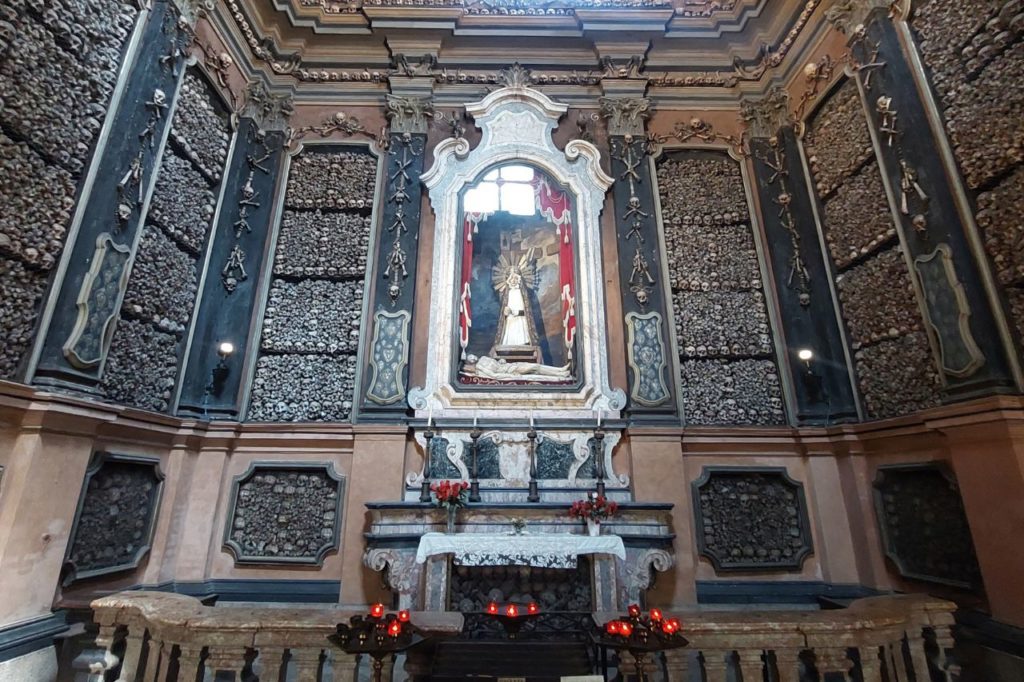
San Bernardino alle Ossa
7. Kutná Hora, Czechia: see the remarkable Bone Church
Around an hour by train from Prague, Kutná Hora makes an easy day trip from the Czech capital, with plenty of time to see its historic centre as well as its most unusual attraction, the Sedlec Ossuary.
Better known as the Bone Church, the Sedlec Ossuary occupies the lower chapel of the Cemetery Church of All Saints and contains the remains of thousands of people. Their bones have been arranged into elaborate decorations throughout the chapel, including garlands, coats of arms and an extraordinary chandelier.
It’s certainly macabre, but there’s more to the Bone Church than its unusual appearance. The site has centuries of history and remains a functioning Roman Catholic church and resting place, with the decoration intended as a reminder of human mortality, or memento mori. Photography inside is prohibited, so this is another place to put your phone away and simply take it all in.
See it by train: Kutná Hora can be reached by train from Prague. Our Prague Without Flying holiday gives you two full days in the Czech capital, or ask our Travel Designers to add another night so you have time for a trip to Kutná Hora.
8. Vienna, Austria: explore the city’s relationship with death
Vienna’s grand palaces tell you plenty about the Habsburgs in life. For the other end of the story, head beneath the Capuchin Church to the Imperial Crypt, where generations of the dynasty were laid to rest.
Around 150 members of the Habsburg family are buried here, including emperors and empresses. Some of the sarcophagi are extraordinarily elaborate. Look out for the enormous double tomb of Empress Maria Theresa and Emperor Franz I, before comparing it with the much simpler tombs of Emperor Franz Joseph, Empress Elisabeth (Sisi) and their son Crown Prince Rudolf.
Then take a trip out to Vienna Central Cemetery, one of Europe’s largest cemeteries. Opened in 1874, its avenues are lined with grand tombs, sculptures and Art Nouveau architecture. Music lovers can seek out the graves of Beethoven, Schubert, Brahms and Johann Strauss II, while a memorial to Mozart stands nearby.
And apologies, this one isn’t particularly spooky, but we couldn’t resist including it to pay homage to Vienna’s musical greats.
See it by rail: Vienna and Prague both feature on our 12-day Budapest, Vienna & Prague by Rail holiday, with two nights in Vienna before the journey continues by Railjet through Moravia and Bohemia.
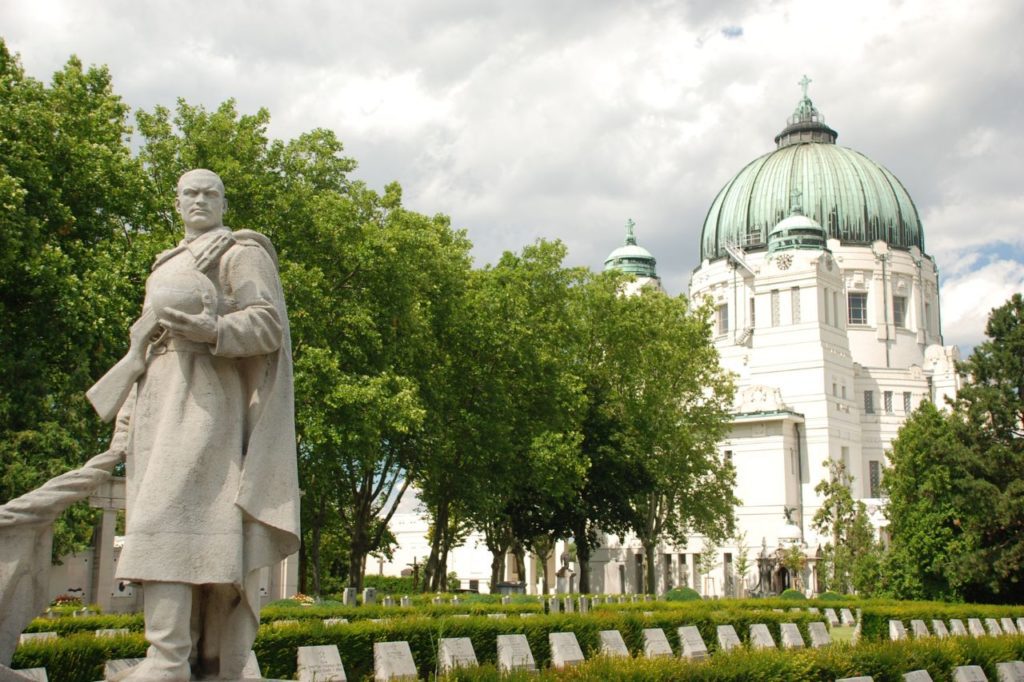
Vienna Central Cemetery
9. Turin, Italy: investigate a city of magic
Turin may be better known for its elegant squares and grand boulevards, but it also has a centuries-old reputation for magic, alchemy and the occult. According to local legend, the city sits at the meeting point of supposed triangles of both white and black magic.
Start in Piazza Statuto, traditionally regarded as the centre of Turin’s black magic. Look up at the winged figure on top of the fountain, which local legend associates with Lucifer. Not far away, you can find the Portone del Diavolo, or Devil’s Gate, at Palazzo Trucchi di Levaldigi, complete with a rather sinister devil-shaped door knocker.
You can follow more of these stories on one of Turin’s dedicated magic walking tours, which take in Masonic symbols, alchemical legends and places you might otherwise easily walk straight past. There’s even a Museum of Witchcraft near Piazza Statuto.
Whether you believe the legends or not, they offer a very different perspective on Turin.
See it by rail: Turin makes a convenient stop on journeys between the UK and Italy. Our Venice via the Gotthard Pass includes an overnight stay in Turin, and our Travel Designers can add extra nights if you’d like longer to explore.
10. Venice, Italy: learn how the city fought the plague
Venice’s position as one of Europe’s great trading cities brought enormous wealth, but ships arriving from around the world also brought the threat of infectious disease.
The Venetians developed clever ways of dealing with outbreaks of plague, using islands in the lagoon to isolate people and goods. The tiny island Lazzaretto Vecchio became a plague hospital in the 15th century, while Lazzaretto Nuovo island was used as a quarantine station for arriving travellers and merchandise. Today, you can still find evidence of Venice’s historic quarantine system there, including the buildings where people were once isolated.
This system played an important part in the development of quarantine, centuries before anyone understood how infectious diseases actually spread.
There are reminders of the plague in Venice itself too. The magnificent domed Basilica di Santa Maria della Salute, at the entrance to the Grand Canal, was built following the devastating plague of 1630. Step inside and even the high altar refers to the epidemic, with a sculpture depicting the plague being driven from Venice.
You may have seen or even visited La Salute before without knowing why it was built.
See it by rail: There are numerous ways to reach Venice without flying. Travel through Switzerland on our Venice via the Gotthard Pass holiday, through Austria on Venice via the Brenner Pass, or combine the city with Milan, Verona and Bologna with our Essential Cities of Northern Italy itinerary.
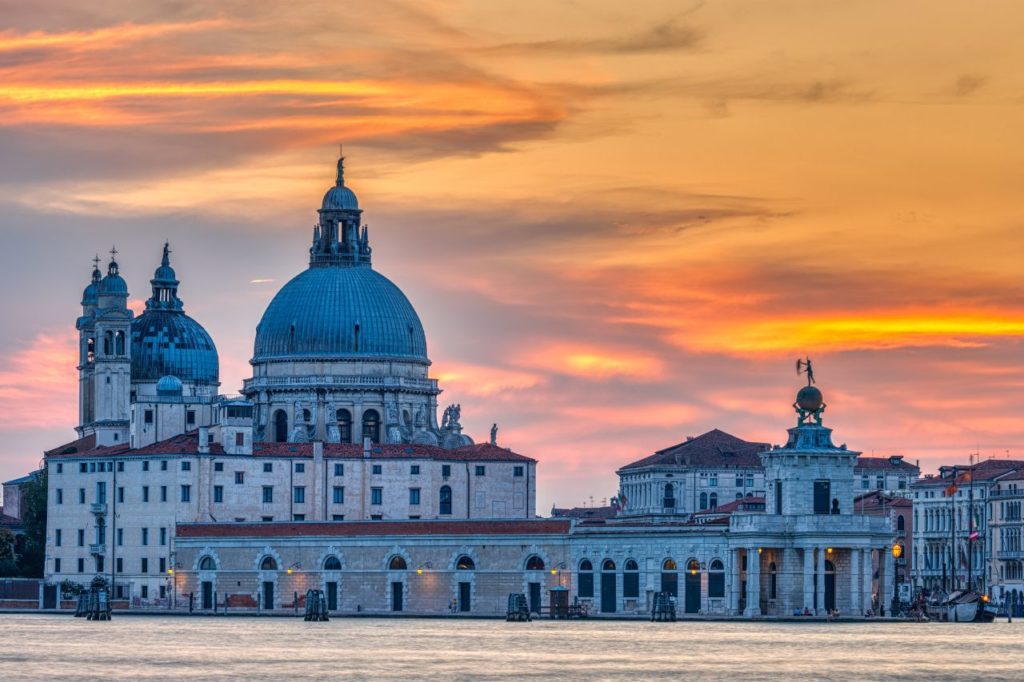
Basilica di Santa Maria della Salute, Venice
Uncover a different side to Europe by train – at any time
Of course, you don’t have to travel at Halloween exclusively to seek out any of these spooky places. Look beyond the typical sights in any European destination, and you can find ghostly tales, macabre places and legends of the supernatural with their roots in Europe’s long and chequered history. Even if you’ve been to these destinations before, you can find something new and unusual, uncovering some of the darker parts of the city, off the beaten track.
If one of our recommendations has haunted your imagination, our Travel Designers can incorporate extra nights, stops and excursions into a tailor-made rail holiday.
Browse our European rail holidays and start planning your next journey.
FAQs about spooky places in Europe
Can you visit Europe’s spooky destinations by train?
Yes. Many of Europe’s most interesting Halloween destinations and unusual historic attractions can be incorporated into a rail holiday. Paris, Prague, Vienna, Milan, Venice, Turin and Tallinn can all be reached by train, while places such as Bran Castle and Sedlec Ossuary require a short onward journey from a nearby rail destination.
Travelling by train also makes it easy to combine several places in one holiday. Prague and Vienna work particularly well together, while Milan, Turin and Venice can be incorporated into a longer journey through northern Italy.
What are the best spooky places to visit in Europe?
Transylvania is the obvious choice for its association with Dracula, while Paris has its famous Catacombs. Other unusual places include Palermo’s Capuchin Catacombs, Sedlec Ossuary near Prague and the bone-decorated chapel of San Bernardino alle Ossa in Milan. Tallinn and Turin are particularly interesting if you prefer legends and folklore.
Where is the best place in Europe to visit for Halloween?
Transylvania is hard to beat at Halloween. Bran Castle embraces its Dracula connections with special events and Halloween celebrations in late October. Prague and Tallinn are also good choices for ghost tours, legends and atmospheric medieval streets, while Paris, Palermo and Milan have macabre sights you can seek out at any time of year.
Which European cities have unusual things to see beyond the main tourist attractions?
Milan’s San Bernardino alle Ossa, Vienna’s Imperial Crypt, the Capuchin Catacombs in Palermo and the Paris Catacombs all offer something very different from their cities’ best-known attractions. Turin’s magic and alchemy tours and Tallinn’s ghost walks also provide alternative ways to see familiar destinations.
Can I visit these places without flying?
Yes. All of the destinations mentioned can be incorporated into a European rail holiday. Some, including Paris, Milan, Vienna and Prague, have excellent international rail connections. Others work particularly well as part of a longer journey, such as Transylvania, Tallinn and Sicily.
Can Tailor Made Rail add extra stops or nights to an itinerary?
Yes. Our suggested itineraries can be tailored, so our Travel Designers can add extra nights, change stops or incorporate additional places into your holiday. For example, you can add extra time in Prague for a day trip to Kutná Hora and the Sedlec Ossuary.
Can Tailor Made Rail arrange tours and excursions?
Yes. Our Travel Designers can also arrange tours, excursions and other extras as part of your holiday. So, if you fancy a ghost walk in Tallinn or a magic tour in Turin, just ask.
Recent Posts

Recommended Itineraries


Share this post